AI for Any Major: TCU's Human-Centered AI Certificate
TCU's Certificate in Human-Centered AI is a 12-credit-hour interdisciplinary program in AddRan College of Liberal Arts that lets students in any major study how artificial intelligence affects people, work and society.
Artificial intelligence can write an essay, generate an image and screen a job application in seconds.
But who decides whether it should?
At Texas Christian University, students are exploring that question and many others through the Certificate in Human-Centered AI, an interdisciplinary program housed in the AddRan College of Liberal Arts.
Human-centered AI is an approach to artificial intelligence that puts people first. Instead of focusing only on what AI can do, it asks how the technology affects the individuals and communities who use it, who benefits from it, who could be harmed by it and how it can be used responsibly.
Designed to complement a range of majors, the 12-credit-hour certificate combines artificial intelligence with the humanities and social sciences, encouraging students to examine not only what AI can do, but how it affects the people who use it.
Whether students are interested in business, communication, creative arts, STEM or the humanities, the certificate offers an opportunity to explore one of today’s most influential technologies through an interdisciplinary lens.
From an Interdisciplinary Idea to a Modern AI Classroom
The program grew from an interdisciplinary effort within AddRan.
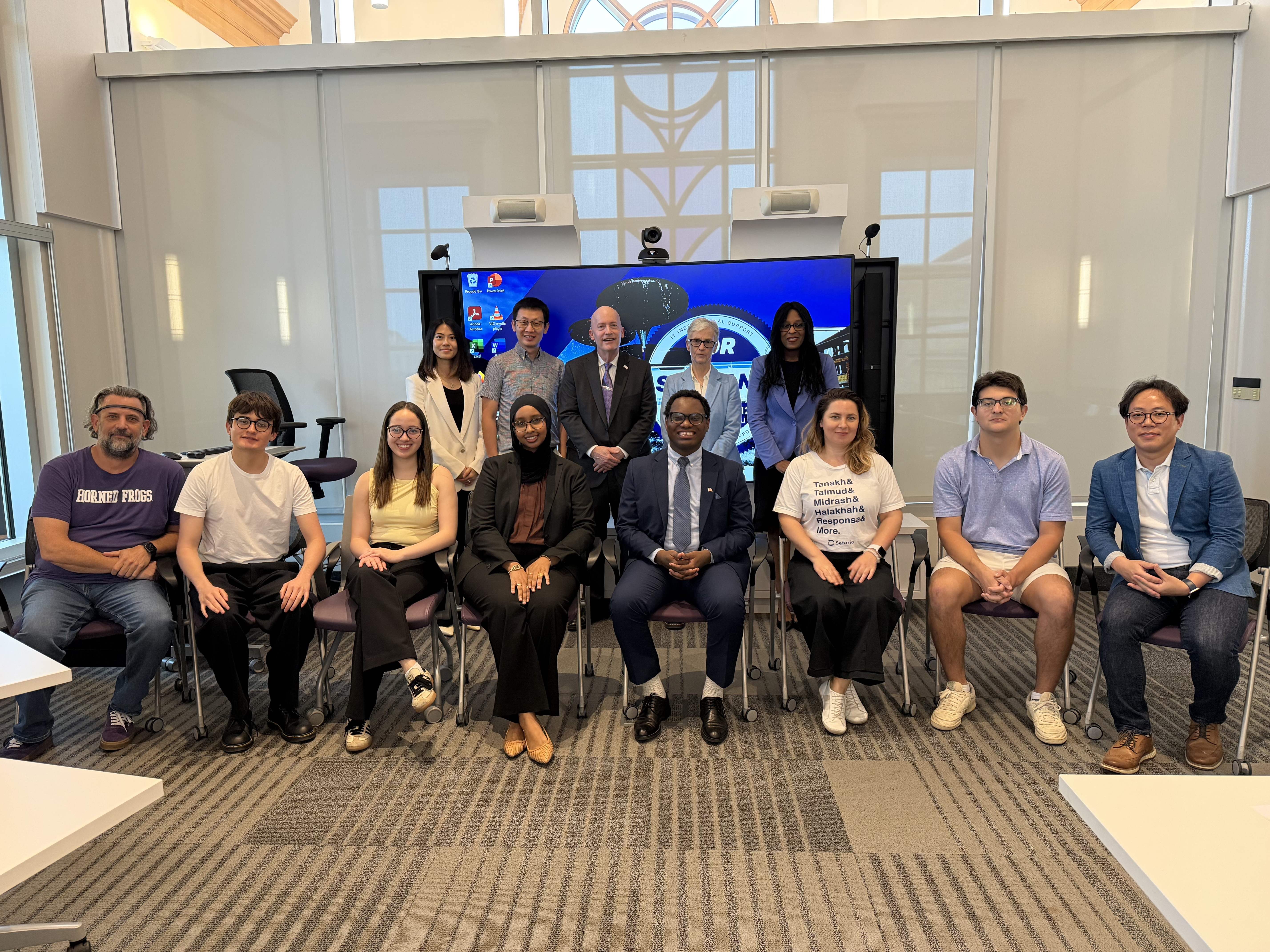
When AddRan Dean Sonja Watson, Ph.D. invited Muriel Cormican, Ph.D., professor of German and associate dean of undergraduate studies, to develop a course around an emerging topic of student interest, Cormican proposed examining artificial intelligence through the humanities and social sciences.
Cormican’s interest also connected naturally to her academic background. Metropolis, the 1927 silent film, offered one example of how people imagined intelligent machines and their relationship with humanity long before today’s generative AI tools existed.
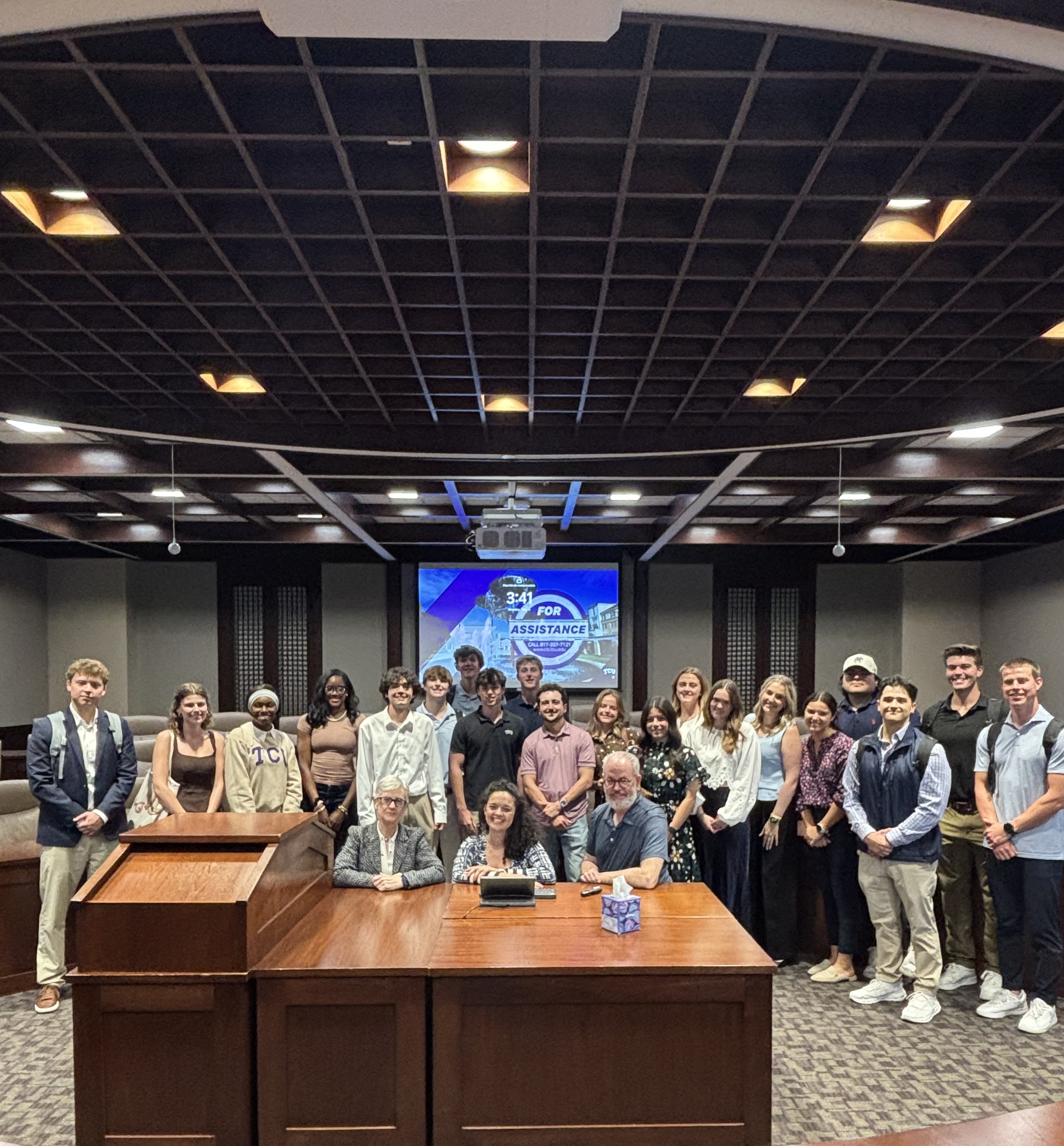
The resulting course, A Human-Centered AI Future, brought together faculty from the Departments of Modern Languages, Criminology and Criminal Justice, Creative Writing, and Spanish and Hispanic Studies to examine AI from different perspectives. Originally offered as a special topics course, it generated enough student interest to become a permanent, stand-alone course and now serves as the foundation for the Certificate in Human-Centered AI.
What Does a Human-Centered AI Class Actually Look Like?
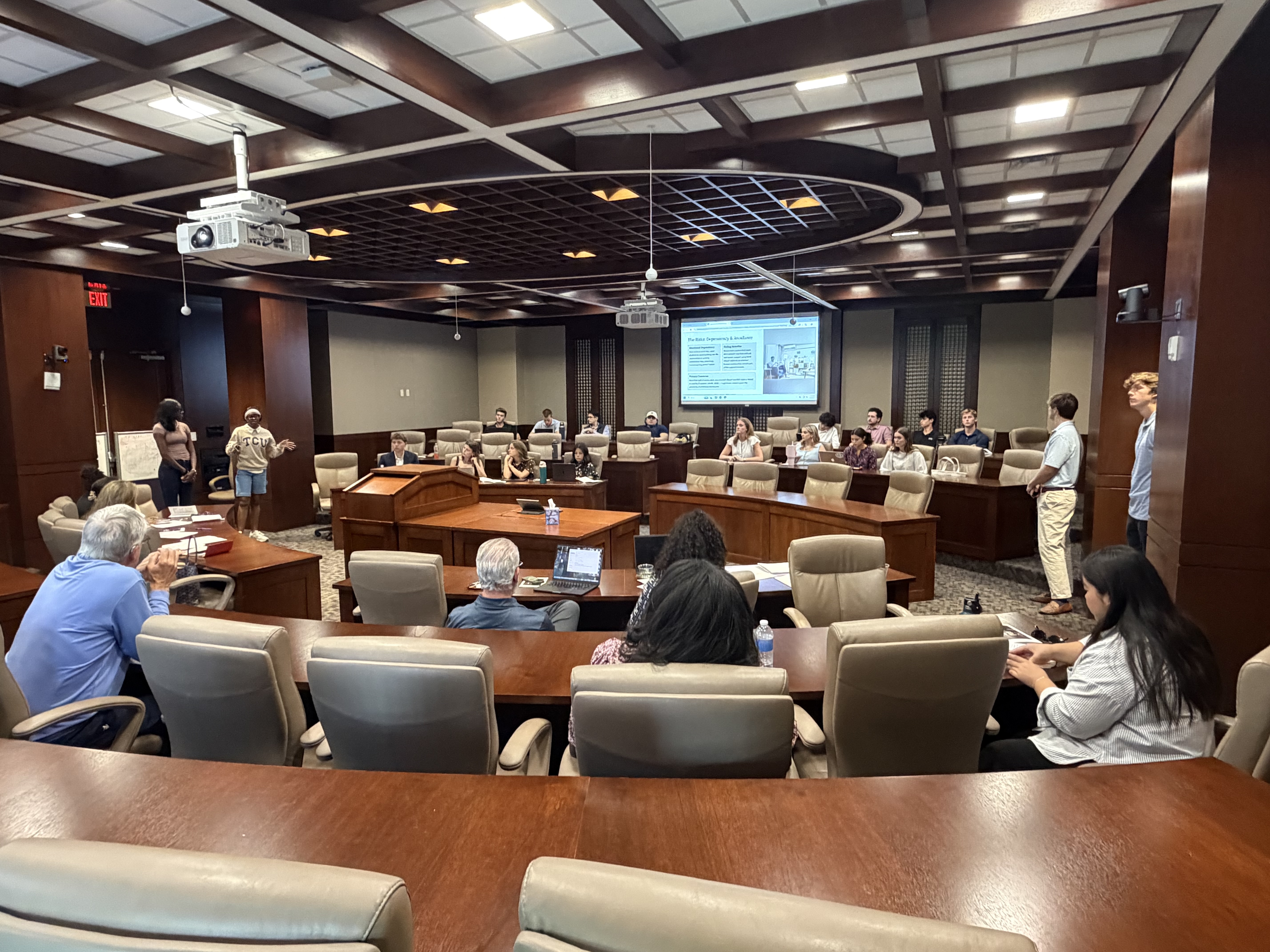
Rather than learning about artificial intelligence exclusively through lectures, students in A Human-Centered AI Future experiment with the technology, explore its limitations and discuss its real-world implications.
The course combines readings, films, classroom discussions and hands-on experimentation to investigate questions about AI’s influence on human identity, creativity, communication and ethical decision-making. Students also collaborate on research projects that challenge them to identify problems, examine their consequences and propose solutions.
Hadley Whytlaw '27, a political science student interested in law, policy and compliance, enrolled in the course because she wanted to better understand a technology that was both exciting and unfamiliar to her.
“My sophomore year, AI still felt relatively new, and I didn’t understand it which made me both excited and nervous,” Whytlaw says. “I saw that AddRan was offering this class, and I decided to sign up so I could understand not just what AI can do, but how we can use it responsibly.”
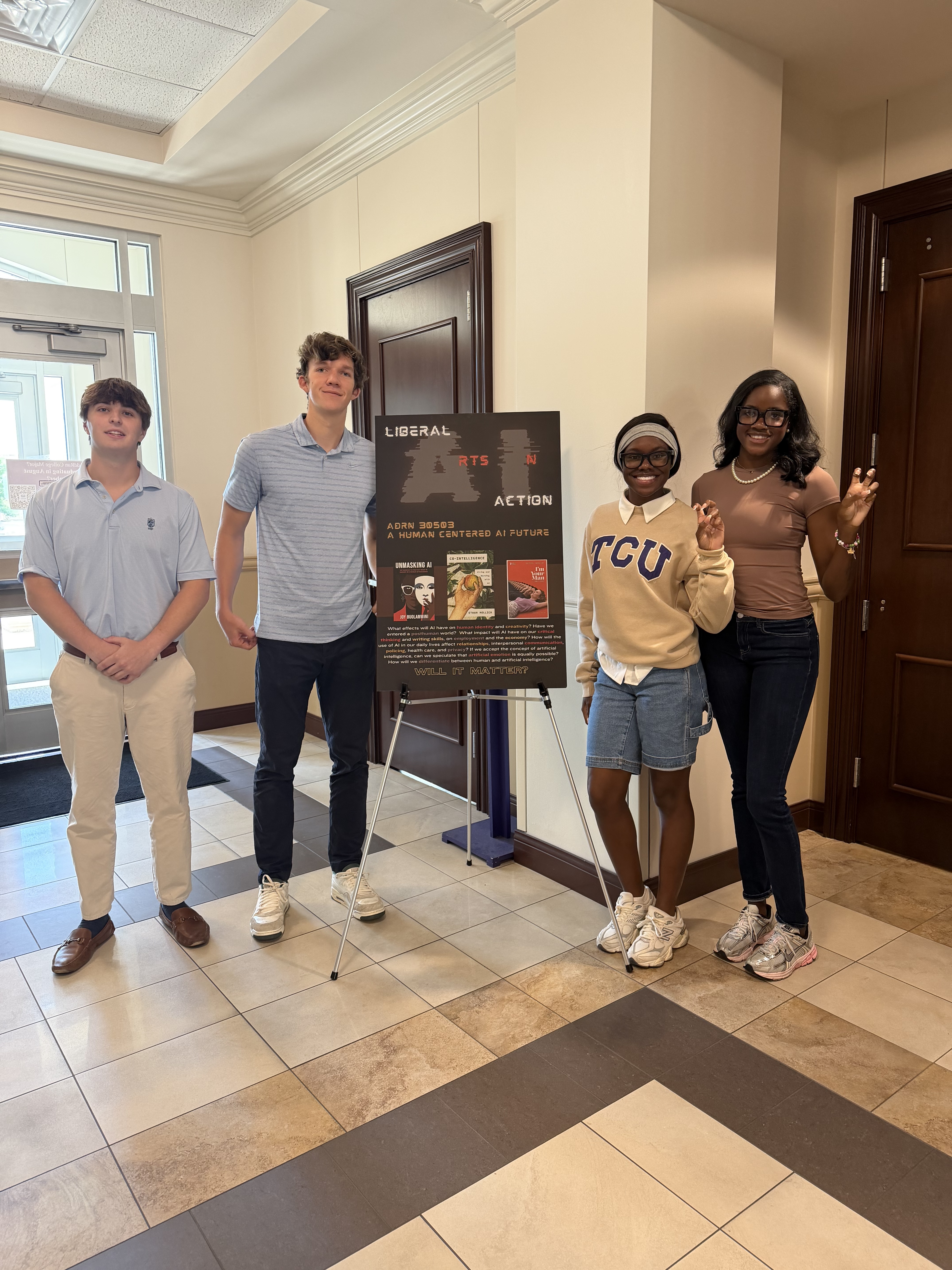
For her final project in Spring 2025, Whytlaw’s group studied the use of AI in hiring. The team examined potential discrimination in AI-assisted hiring, including how systems could sort applicants based on perceived ethnicity in names or similarities to existing employees.
“Doing that project made me realize how AI can be a double-edged sword, especially when saddled with the bias of people who helped develop it,” Whytlaw says.
The experience also changed the way she thinks about AI’s role in her future career. As someone interested in law and policy, Whytlaw sees understanding AI as increasingly important to areas such as contracts, compliance, governance and decision-making.
“Before this, I mostly thought of AI as a tool to make work faster or check things off more efficiently,” she explains. “Now I think a lot more about the responsibility that comes with using it.”
One Certificate, Many Academic Paths
TCU's Certificate in Human-Centered AI is designed to complement students’ existing academic interests, allowing them to explore how emerging technology connects to their chosen fields.
A student majoring in communication might examine how AI changes the way people create and consume information. A business student might explore its implications for hiring and decision-making. A humanities student might investigate how technology shapes language, culture and creativity.
Those different perspectives can come together in the same classroom, where students contribute their own experiences and approaches to understanding a shared problem.
Whytlaw emphasizes students shouldn’t assume studying AI requires a computer science background.
“Don't let the term ‘AI’ scare you,” she says. “You don’t need a computer science background to understand it or be part of the conversation.”
The certificate requires 12 credit hours, organized into three components:
- A required foundation: A Human-Centered AI Future, a three-credit-hour course examining artificial intelligence through an interdisciplinary lens.
- AI methods courses: Students complete three to six credit hours from options including Artificial Intelligence, Creative Coding in the Humanities and AI Concepts and Large Language Model Applications.
- Electives: Students complete three to six credit hours from subjects including Introduction to Programming, Introduction to Python for Data Analytics, Digital Humanities, Data Science and Public Policy, Digital Religion and Cyberliteracy.
The curriculum also includes distinctive courses such as Digital Religion: God, the Soul, and Morality after the Digital Revolution and Technologies of History from Cuneiform to Coding. To encourage students to explore multiple disciplines, no more than six credit hours can come from courses with the same prefix.
Students can therefore combine technical coursework with classes examining the historical, cultural, social and ethical dimensions of technology, building an academic experience that connects AI to their individual interests and career goals.
That interdisciplinary understanding also has professional relevance. AI is increasingly influencing fields far beyond technology itself, making the ability to evaluate when and how these tools should be used valuable across industries. Whytlaw sees that connection in her own career interests.
“As someone who’s interested in law and policy, I know AI is going to keep influencing contracts, compliance, governance and decision-making,” Whytlaw explains. “That makes it even more important for the people writing laws and policies to understand the technology well enough to ask good questions, recognize its limitations and protect the people affected by it.”
Preparing Students for a Future Shaped by AI
The certificate is part of TCU’s broader work to engage with artificial intelligence through teaching, research and interdisciplinary collaboration.
AddRan has also established the Human-Centered AI Cluster, co-directed by Cormican and Professor of Geography Xiaolu Zhou, Ph.D. The faculty-led initiative fosters AI innovation through research collaboration, education and community engagement while encouraging students to explore AI’s practical, social, ethical and cultural dimensions.
In April 2026, AddRan hosted a Human-Centered AI Symposium, extending those conversations beyond individual classrooms and bringing together scholars to examine the technology’s role in education and society.
Understanding artificial intelligence requires more than knowing how to operate it. It also requires asking thoughtful questions, evaluating its limitations and considering the people affected by the decisions it helps make.
For Whytlaw, that broader perspective is what makes the subject relevant regardless of a student’s major.
“AI is already changing the way people work in just about every field, from business and health care to government, education and sports,” Whytlaw says. “No matter what you’re studying, it’s worth understanding how these tools affect people and how to use them responsibly.”
Frequently Asked Questions About TCU's Human-Centered AI Certificate
What is TCU's Certificate in Human-Centered AI?
The Certificate in Human-Centered AI is a 12-credit-hour interdisciplinary program
in TCU's AddRan College of Liberal Arts. It combines artificial intelligence with
the humanities and social sciences, so students learn both how AI works and how it
affects people, careers and society.
Who can earn the certificate?
The certificate is designed to complement a wide range of majors. Students studying
business, communication, the creative arts, STEM or the humanities can all use it
to explore how AI connects to their field and career goals.
Do I need coding or computer science experience?
No. A computer science background isn't required to start the certificate. The foundation
course, A Human-Centered AI Future, is built for students from every discipline. Students who want more technical skills
can also choose courses such as Introduction to Programming or Introduction to Python for Data Analytics.
What courses are required?
Students complete 12 credit hours:
- the three-credit-hour foundation course, A Human-Centered AI Future
- three to six credit hours of AI methods courses
- three to six credit hours of electives in areas such as digital humanities, public policy and digital religion
No more than six credit hours can come from courses with the same prefix.
How does the certificate fit with my major?
The certificate adds an AI perspective to what you're already studying. A communication
major might examine how AI changes the way people create information, a business major
might explore AI in hiring and a humanities major might study how technology shapes
language and culture.
Why does human-centered AI matter for my career?
AI is influencing fields far beyond technology, including business, health care, law,
government, education and sports. Employers increasingly value people who can judge
when and how AI tools should be used, recognize their limitations and protect the
people affected by the decisions those tools help make.
Interested in exploring artificial intelligence at TCU?
Learn more about the Certificate in Human-Centered AI, discover opportunities in the AddRan College of Liberal Arts and schedule a campus visit to see how you can make your interests part of your Horned Frog experience.