Exploring One of Many Pre-Med Paths at TCU
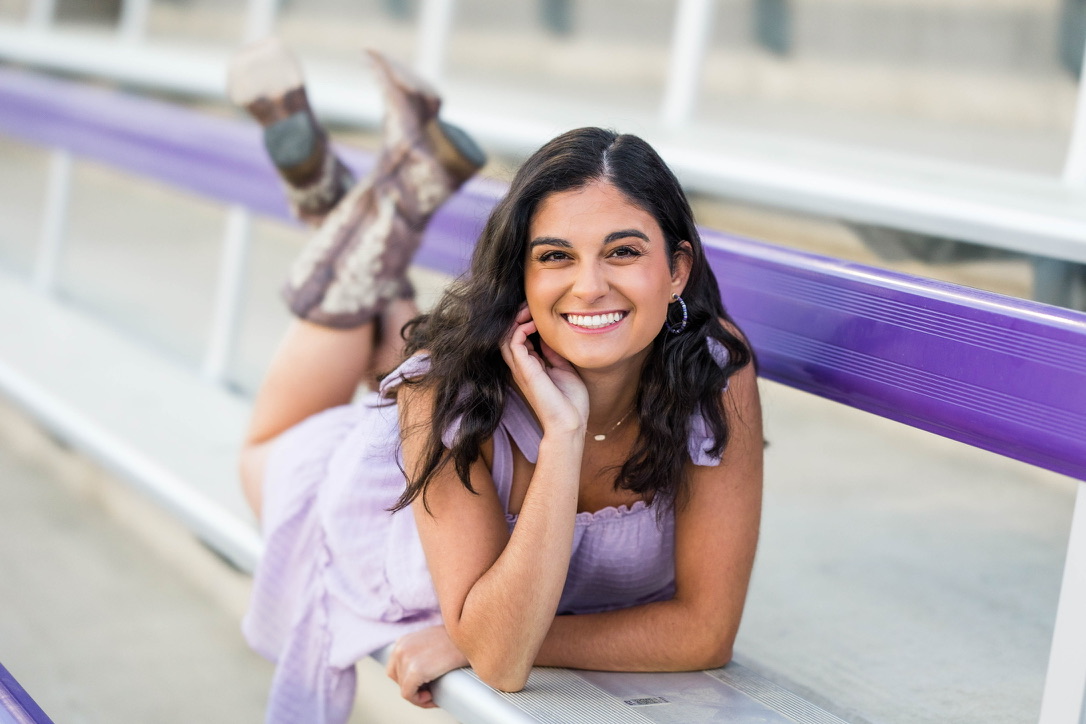 Julia Morales ’22, a movement science and combined science student, thrived both inside and outside the classroom. From serving as a resident
assistant and Chancellor Host to volunteering as a tour guide and taking on leadership
roles, she fully immersed herself in campus life. Below, Julia shares her story in
her own words, reflecting on her journey from kinesiology student to aspiring pediatrician.
Julia Morales ’22, a movement science and combined science student, thrived both inside and outside the classroom. From serving as a resident
assistant and Chancellor Host to volunteering as a tour guide and taking on leadership
roles, she fully immersed herself in campus life. Below, Julia shares her story in
her own words, reflecting on her journey from kinesiology student to aspiring pediatrician.
Q: How did your time at TCU shape your academic and personal growth?
A: My time at TCU was full of opportunities to grow academically, professionally and personally. I served as a Resident Assistant in Milton Daniel Hall for three years, acted as a Chancellor Host for two years and volunteered as a tour guide through Student Foundations, eventually serving as Director of Membership. Academically, I worked as a general chemistry tutor and Introductory Biology teaching assistant, which reinforced my love for helping others learn.
Q: What was a memorable academic experience that shaped your interest in medicine?
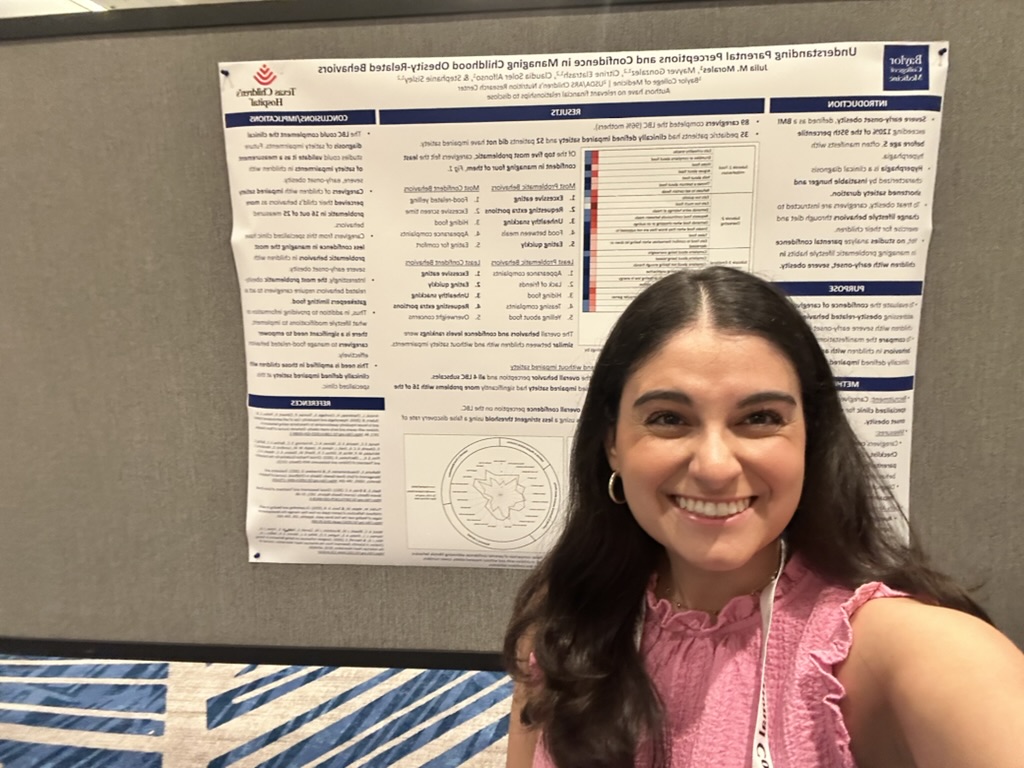 A: I initially believed that medicine required a biology major, but I quickly discovered
the opportunities that Movement Science and kinesiology offered. In one of my first
courses, I used a life-sized virtual reality anatomy simulation that allowed me to manipulate bones, muscles and organs in 3D. That experience made
the human body feel tangible and sparked my deeper interest in medicine.
A: I initially believed that medicine required a biology major, but I quickly discovered
the opportunities that Movement Science and kinesiology offered. In one of my first
courses, I used a life-sized virtual reality anatomy simulation that allowed me to manipulate bones, muscles and organs in 3D. That experience made
the human body feel tangible and sparked my deeper interest in medicine.
Q: What hands-on experiences prepared you for a career in medicine?
A: A kinesiology internship at Southwest Sport and Spine Center was one of the most formative parts of my undergraduate experience. I assisted with reading ultrasounds, filling pain pumps and observing needle aspirations, which helped me gain confidence in clinical environments. I also learned about the business side of medicine, including patient expectations and practice management.
I also shadowed a pediatrician through TCU’s Pre-Health Department, where I built a meaningful connection with a young patient who called me “the little doctor.” That experience reinforced the importance of forming authentic relationships with patients.
Q: How did research at TCU influence your career path?
A: My research in the Applied Metabolic and Physiology Lab further shaped my career goals. I designed a project investigating how physical activity influenced inflammation in patients with Parkinson’s disease. Presenting my senior honors thesis earned me first place at the Harris College of Nursing & Health Sciences Boller Competition, and third place at the university-wide level.
These experiences showed me how lifestyle, movement and prevention directly impact health outcomes—something I plan to carry into my future in pediatric primary care.
Q: Who were the mentors that impacted your journey most?
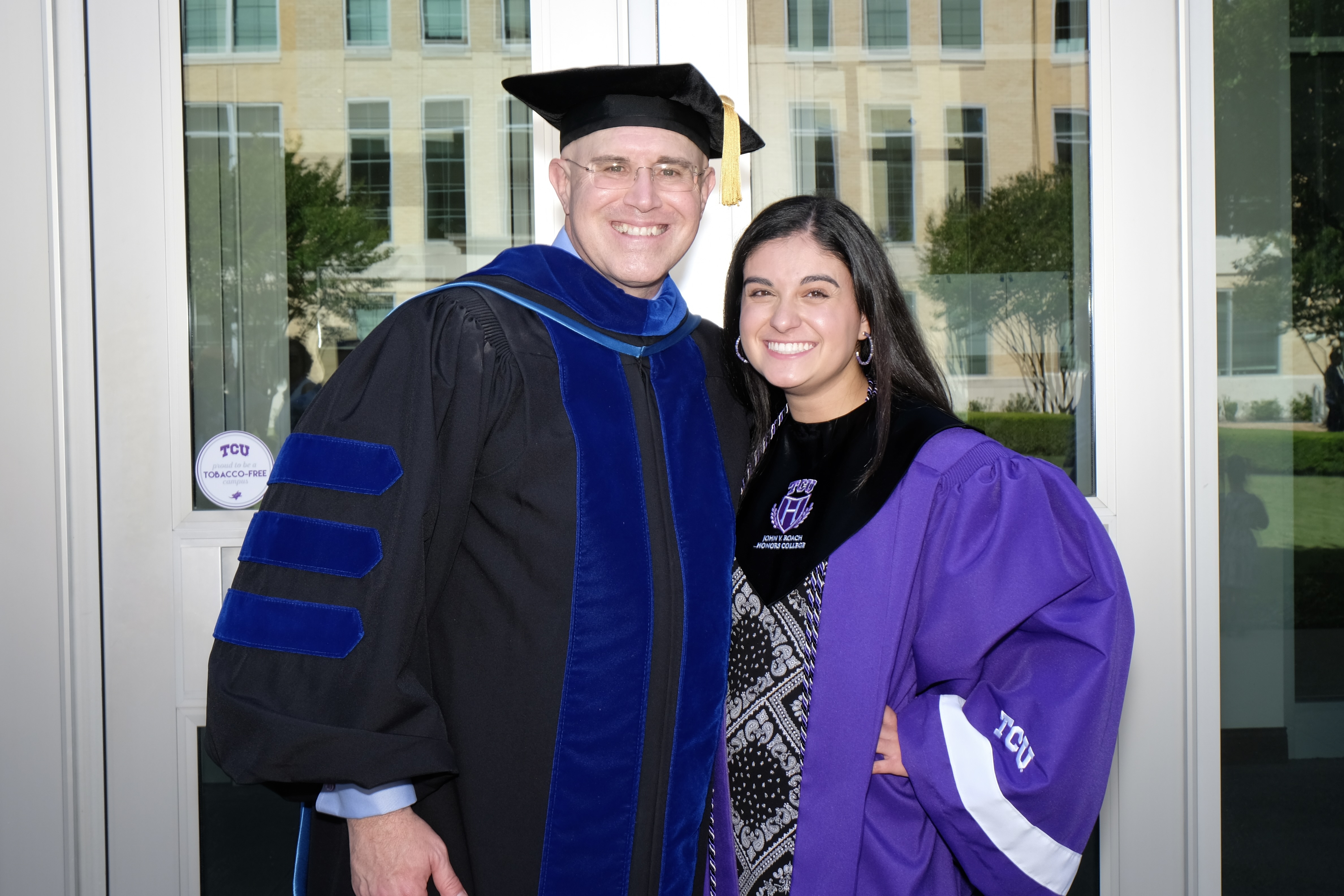 A: Several faculty members played a key role in my growth. Dr. Laura Luque challenged me academically and later selected me as a teaching assistant, helping
me grow as an educator. Dr. Phil Esposito supported my path to medical school and helped me strategically plan my coursework. Dr. Ryan Porter guided me through my honors thesis and introduced me to clinical research, which
inspired me to continue research through publications and national presentations.
A: Several faculty members played a key role in my growth. Dr. Laura Luque challenged me academically and later selected me as a teaching assistant, helping
me grow as an educator. Dr. Phil Esposito supported my path to medical school and helped me strategically plan my coursework. Dr. Ryan Porter guided me through my honors thesis and introduced me to clinical research, which
inspired me to continue research through publications and national presentations.
Q: How did TCU prepare you for medical school academically?
A: TCU’s rigorous academics prepared me well for medical school. The Pre-Health Professional Development course helped me complete and refine my application essays with detailed feedback. Learning from professors involved in MCAT (Medical College Admission Test) question-writing also gave me early exposure to complex problem-solving. Combined with support from the Pre-Health advising team, I felt well prepared entering the application process.
Q: What advice would you give to students interested in pursuing medicine?
A: I would encourage students to think beyond the “typical” pre-med path. Explore opportunities across majors and campus organizations, build relationships with professors and seek mentorship. Getting involved in research, leadership and service can help you stand out and grow. TCU provides an environment where you can explore your interests while building a strong academic foundation.
Q: How have you stayed connected to TCU since graduating?
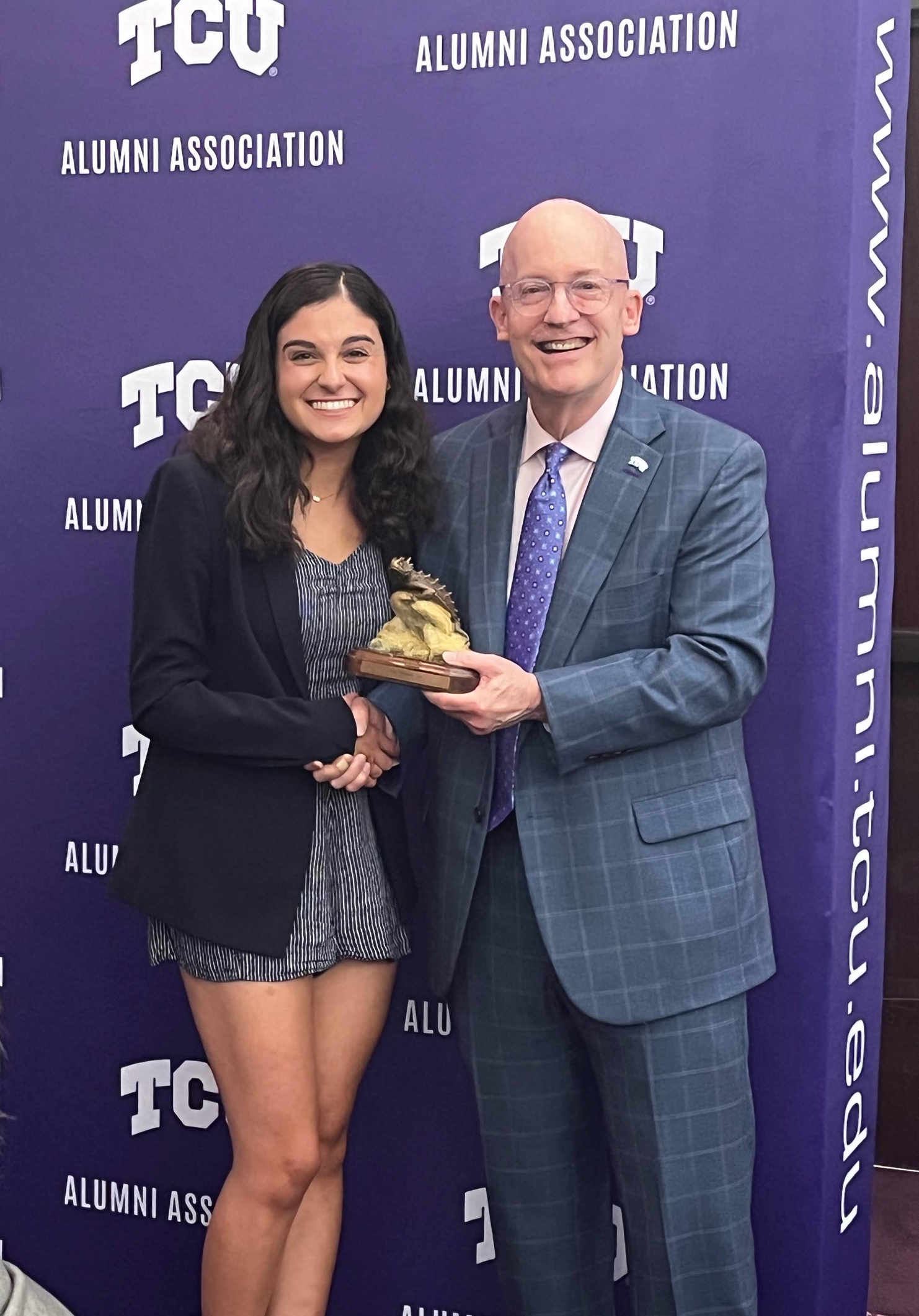 A: I’ve stayed involved as a Chancellor Scholar alumni interviewer and by attending Chancellor Scholars Weekend. I also enjoy visiting
campus to see my younger sister, who is now a first-year student. Staying connected
allows me to give back and support future Horned Frogs.
A: I’ve stayed involved as a Chancellor Scholar alumni interviewer and by attending Chancellor Scholars Weekend. I also enjoy visiting
campus to see my younger sister, who is now a first-year student. Staying connected
allows me to give back and support future Horned Frogs.
Q: What are you most excited about in your future career?
A: As I finish my fourth year of medical school, I’m excited to begin my residency in pediatrics. I hope to become an academic pediatric primary care physician, helping children develop healthy habits and building long-term relationships with patients and their families.
Q: What do you hope prospective students take away from your story?
A: I hope students see that TCU is a place where you can thrive academically, personally and professionally. The relationships you build and the opportunities you pursue can have a lasting impact. Becoming a Horned Frog was the best decision I ever made.
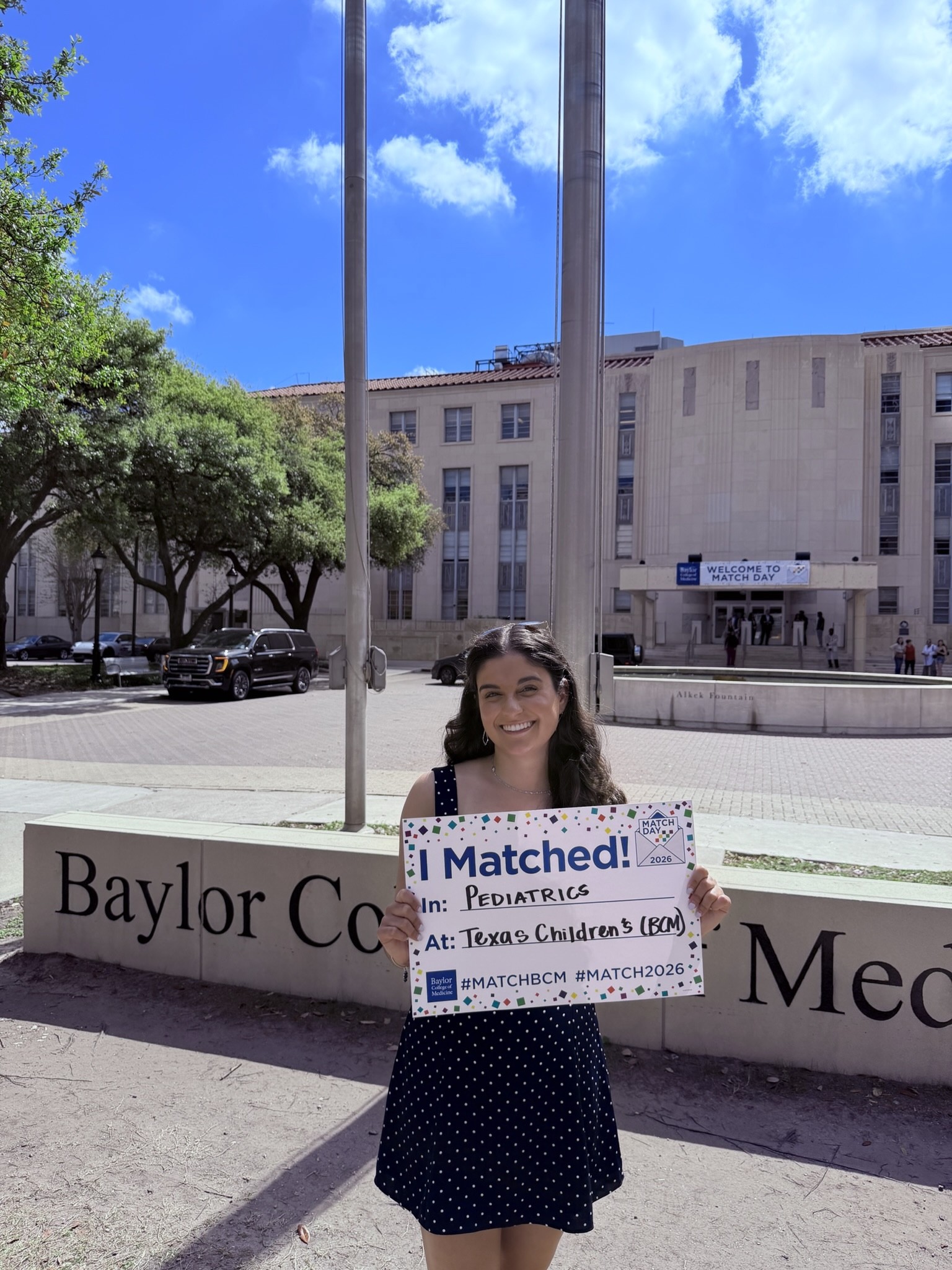 Julia Morales’ journey reflects the impact of combining academic rigor, meaningful mentorship and
hands-on experience at TCU. As she takes the next step in her career, she matched
at her first-choice program, Texas Children’s Hospital at Baylor College of Medicine,
where she will continue her training in pediatrics. Her story is a testament to the
opportunities available at TCU and the strong foundation it provides for future physicians.
Julia Morales’ journey reflects the impact of combining academic rigor, meaningful mentorship and
hands-on experience at TCU. As she takes the next step in her career, she matched
at her first-choice program, Texas Children’s Hospital at Baylor College of Medicine,
where she will continue her training in pediatrics. Her story is a testament to the
opportunities available at TCU and the strong foundation it provides for future physicians.