A University Families Can Trust
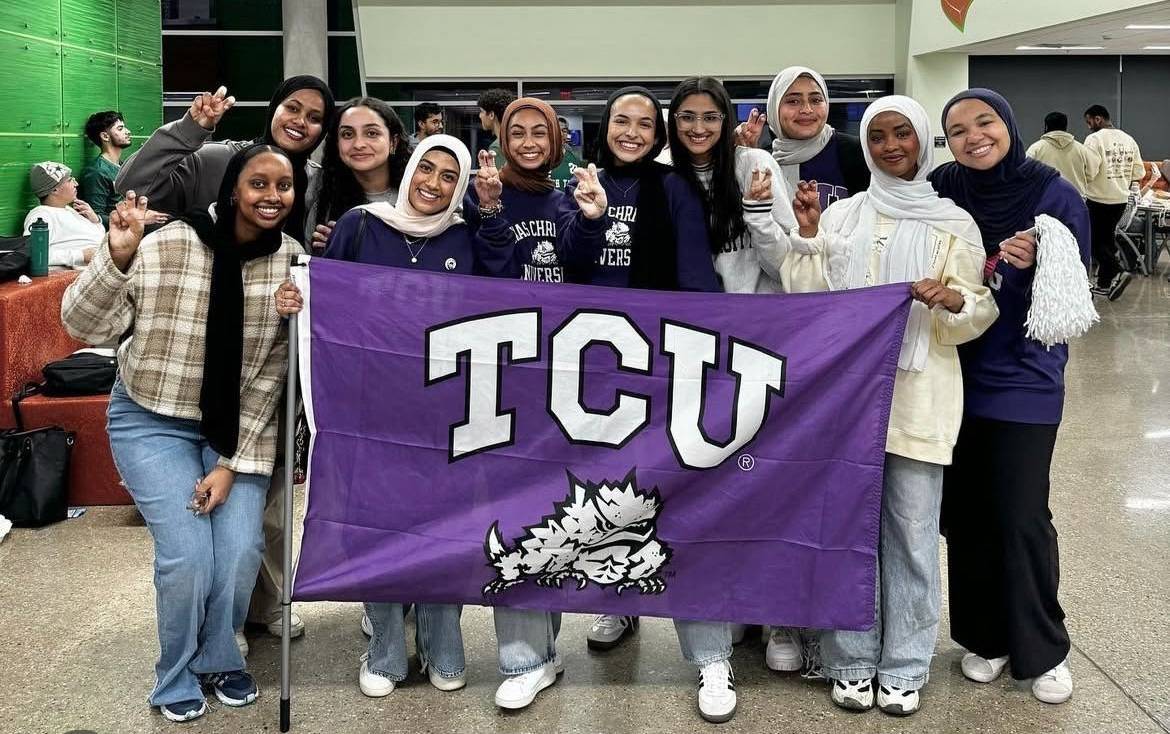 For international students, the guiding question when selecting a university often
revolves around belonging: "Will I belong here?"
For international students, the guiding question when selecting a university often
revolves around belonging: "Will I belong here?"
For parents, the question often extends further. Wrapped up in belonging is a sense of safety and security, value alignment and confidence that there is a reliable support system in place for the academic, physical, mental, emotional and spiritual flourishing of their student.
When a student is far from home, how they are cared for matters more than anything.
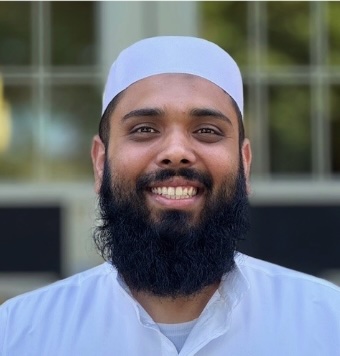 TCU’s Muslim Community Advisor Imam Abbad Tahir shares his insight that institutions with longstanding religious traditions — even
those outside of Islam — can offer Muslim students a strong sense of belonging. The
reason is simple: where traditions of nourishing the spiritual individual exist, care
for the whole student is deeply rooted.
TCU’s Muslim Community Advisor Imam Abbad Tahir shares his insight that institutions with longstanding religious traditions — even
those outside of Islam — can offer Muslim students a strong sense of belonging. The
reason is simple: where traditions of nourishing the spiritual individual exist, care
for the whole student is deeply rooted.
TCU is a private, mid-sized university with a long-established tradition of supporting student flourishing. Here, we support an education that blends faith, reason and intellectual curiosity, ensuring individuals from all religious traditions and spiritual paths are respected and represented within our campus community. Students come from more than 60 religious groups and participate in nearly 30 recognized student religious organizations on campus.
Learn More about TCU's Church Relationship
Located in the thriving Dallas–Fort Worth metroplex, studying at TCU offers Muslim students meaningful opportunities to engage their faith both on and off campus. Just ten minutes from campus is the mosque where Tahir serves as Imam and youth coordinator. By dividing his time between the campus and the mosque, he serves the community in both settings — meeting with and advising students in ways that support both their academic journey and their spiritual well-being.
When asked to describe what his role as Muslim community advisor involves, Imam Tahir responds with a smile, “everything.”
He goes on to share that, for him, the most important priority is being consistently available to students. Reflecting on his own spiritual journey as a young man, he shares the questions that pushed him forward in his religious study, “Who am I?” and “What makes me Muslim outside of birth?”
Tahir describes students today as incredibly inquisitive. Regardless of religious affiliation, university-aged individuals have deep questions about the world around them and their place within it.“It’s not a Muslim problem,” he says. “It’s a human problem.”
Making himself available doesn’t simply mean keeping his phone on — although Tahir admits he never turns it off. He explains that students’ needs often arise at moments that do not align with time zones overseas. Being reachable at any time is one way he demonstrates care and commitment to the students he serves.
Tahir notes that he never intended to become a religious leader. Rather, his intellectual curiosity and desire for self-discovery led him to this role. Having access to someone available to discuss difficult questions was something he needed when he was younger. “I was able to get that, and I try to give that back,” he says.
Acting not only out of compassion but out of lived understanding, Tahir knows what it means to navigate two worlds. Born in Pakistan and raised in California, he advises students with insight on what it means to be Muslim in America. Having lived in Pakistan until the age of nine, he carries with him a deep understanding of the culture, clans, tribes and family dynamics that play an important role in many students’ identities and relationships. He continues to travel regularly to Pakistan to visit family and, when possible, visits religious sites across the MENA (Middle East and North Africa) region.
One thing is clear: the challenges students face are often the same across cultures — it is simply a matter of whether they are openly acknowledged.
Tahir observes that for many students navigating such challenges in less discreet environments, faith becomes a source of strength rather than distance.
From a campus-wide perspective, TCU is intentional about ensuring students have opportunities to lean into their faith. A comprehensive team of spiritual advisors exists to make campus a welcoming and reassuring environment for all students. Tahir credits TCU Chaplain Reverend Todd Boling and Associate Chaplain and Church Relations Officer Reverend Lea McCracken as trusted partners in this work. “They take the lead on caring for students,” he says.
Tahir frequently collaborates with the Reverends and emphasizes that it is through the leadership of the Office of Religious and Spiritual Life (RSL) that he serves on TCU’s campus. He credits the creation of his position to their team, stating, “They hired me.” He clarifies that while he has served in this role since August 2025, the position itself has existed for many years — “they’ve had many other advisors over the years.” Support for Muslim students at TCU is well established.
RSL’s Jarvis Hall serves as a place of calm and reflection amid the demands of student life. On Fridays, weekly prayer sessions are held there for students and led by Tahir. When he is unable to be on campus, he helps coordinate transportation so students may attend Friday prayer at the mosque.
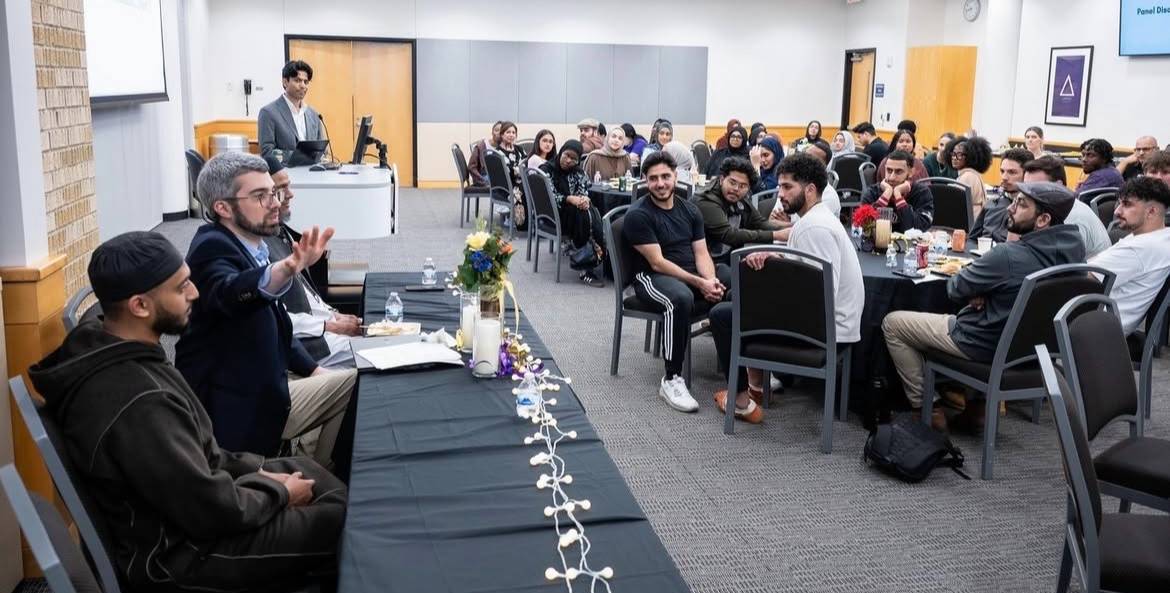 Tahir also works closely with the RSL office and the Muslim Student Association (MSA), where he serves as Spiritual Advisor on the Board. He supports students alongside
MSA Faculty Advisor Samuel Ross, Ph.D., a professor in the Department of Religion. Ross teaches courses related to Islam, including Qur’anic studies, Exegesis and
Commentary Literature (tafsīr), Muslim-Christian relations, Islam and modernity, and
Islam in America— offering students structured opportunities to deepen their understanding
of Islam and the MENA region in the classroom.
Tahir also works closely with the RSL office and the Muslim Student Association (MSA), where he serves as Spiritual Advisor on the Board. He supports students alongside
MSA Faculty Advisor Samuel Ross, Ph.D., a professor in the Department of Religion. Ross teaches courses related to Islam, including Qur’anic studies, Exegesis and
Commentary Literature (tafsīr), Muslim-Christian relations, Islam and modernity, and
Islam in America— offering students structured opportunities to deepen their understanding
of Islam and the MENA region in the classroom.
Tahir describes his involvement as including thoughtful planning of programs and events throughout the year, particularly during Ramadan, when students gather at the local mosque for meals. Beyond formal programming, he also opens his home to students for tea — an act that holds deep cultural significance for many international students.
He further shares that the local mosque community includes individuals from 15 to 20 different nationalities on a daily basis. Some students attend nightly, finding the mosque to be an essential place for spiritual grounding, cultural familiarity and community connection. There, students experience a sense of home — much like they do on TCU’s campus.
While applying to universities abroad can feel complex, the question of belonging is central. At TCU, students are welcomed into a community where care, faith and personal flourishing are intentionally supported.
Ready to begin an “Only Here” journey at TCU? Start here.