Where Can a TCU Math Degree Take You?
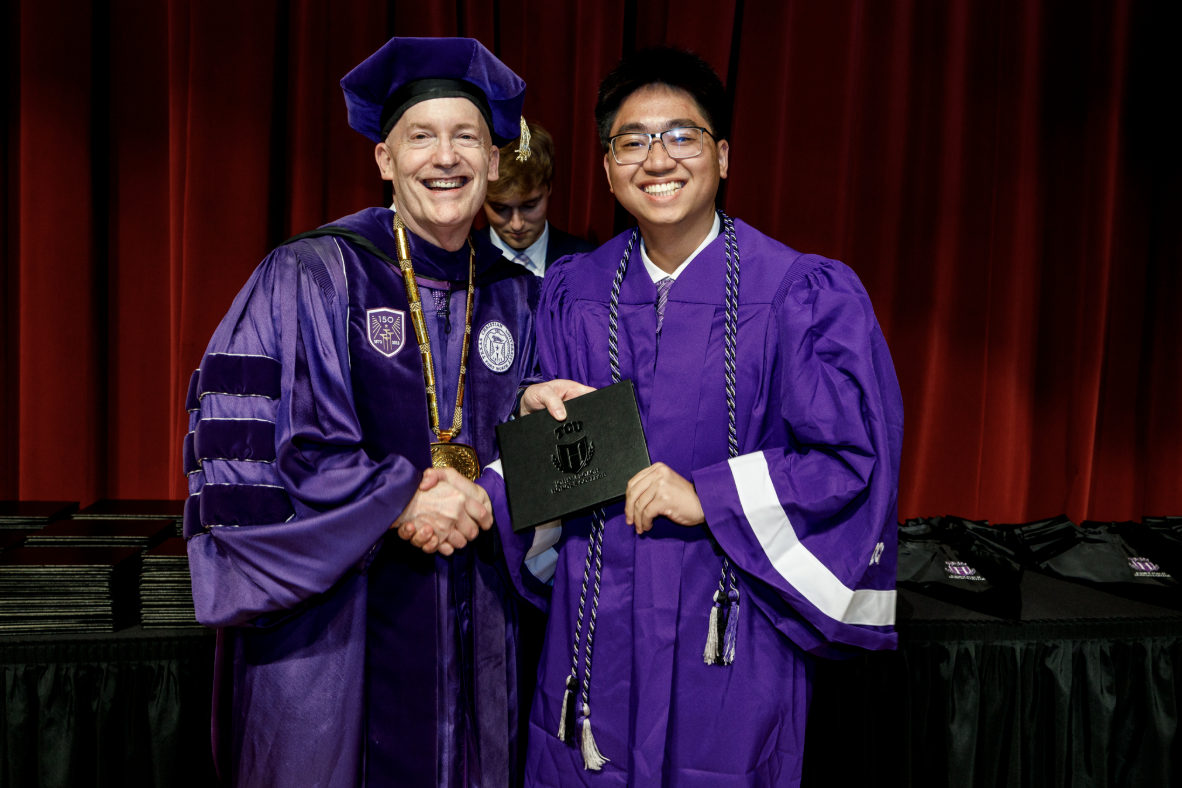
Duc Toan Nguyen '25 sat down for dinner with every professor in TCU's computer science department during his junior year. The dinner, connected to his induction into the computer science honor society Upsilon Pi Epsilon, was the kind of tradition he says would be difficult to recreate at a large university.
Emma Schmidt '21 once assumed that studying math meant becoming an actuary. At TCU, she discovered a much broader set of possibilities, and faculty mentorship helped her make the graduate-school decision that eventually led to a career in professional basketball analytics.
For mathematically minded students exploring college options, one question tends to come up early: Does the size of the program shape the size of the opportunity? At TCU, alumni and faculty describe a smaller department where students can build close relationships, pursue independent research and apply quantitative skills in directions they may not have imagined.
From TCU Math to Sports Analytics
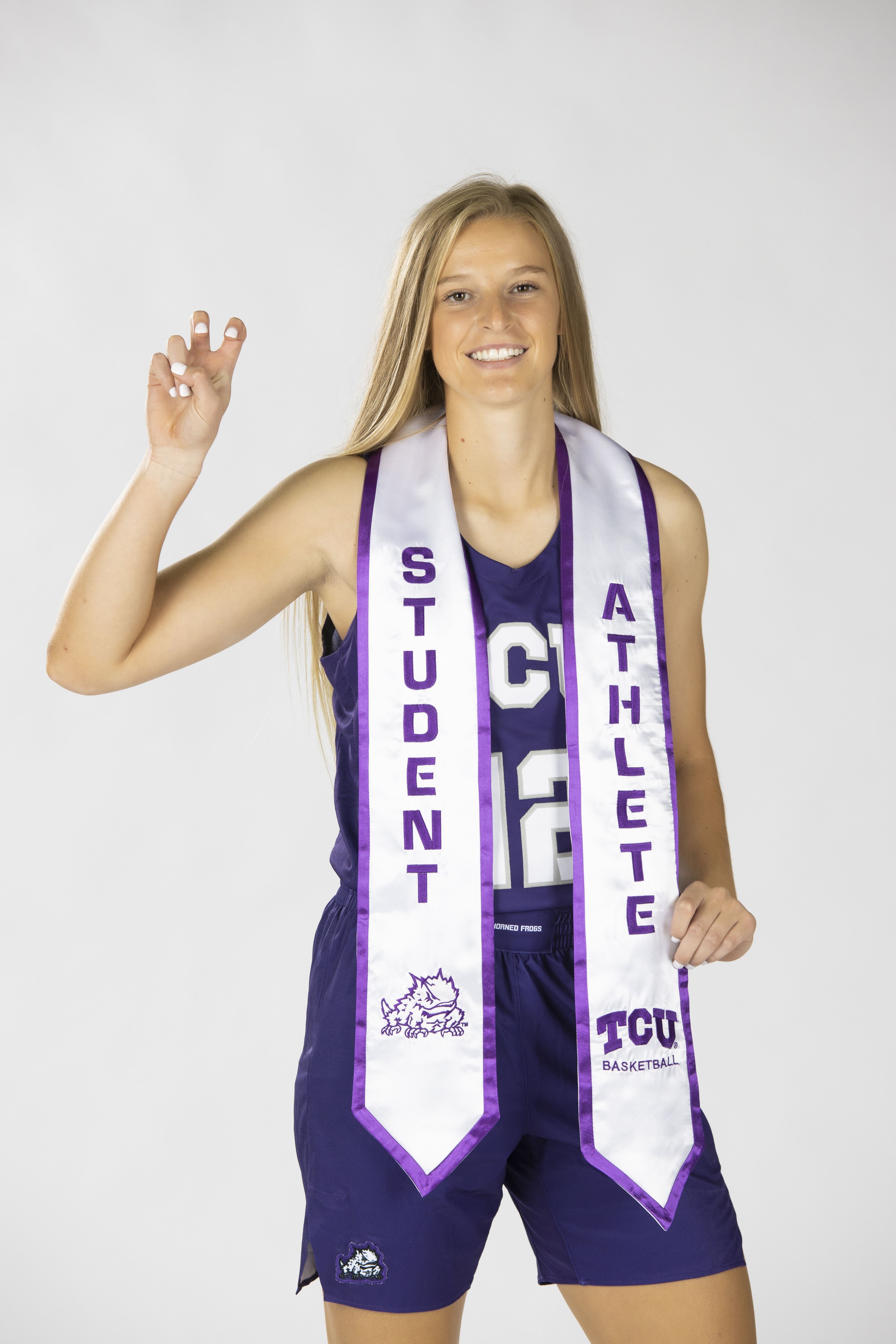
Schmidt came to TCU from Waukee, Iowa, majoring in mathematics with an actuarial science concentration and a minor in economics. She also played for TCU women's basketball. The path she imagined for herself looked very different from where she eventually landed.
"I chose math because it was something I genuinely enjoyed and excelled at in high school," Schmidt says. "At the time, I didn't fully understand the range of opportunities it could open."
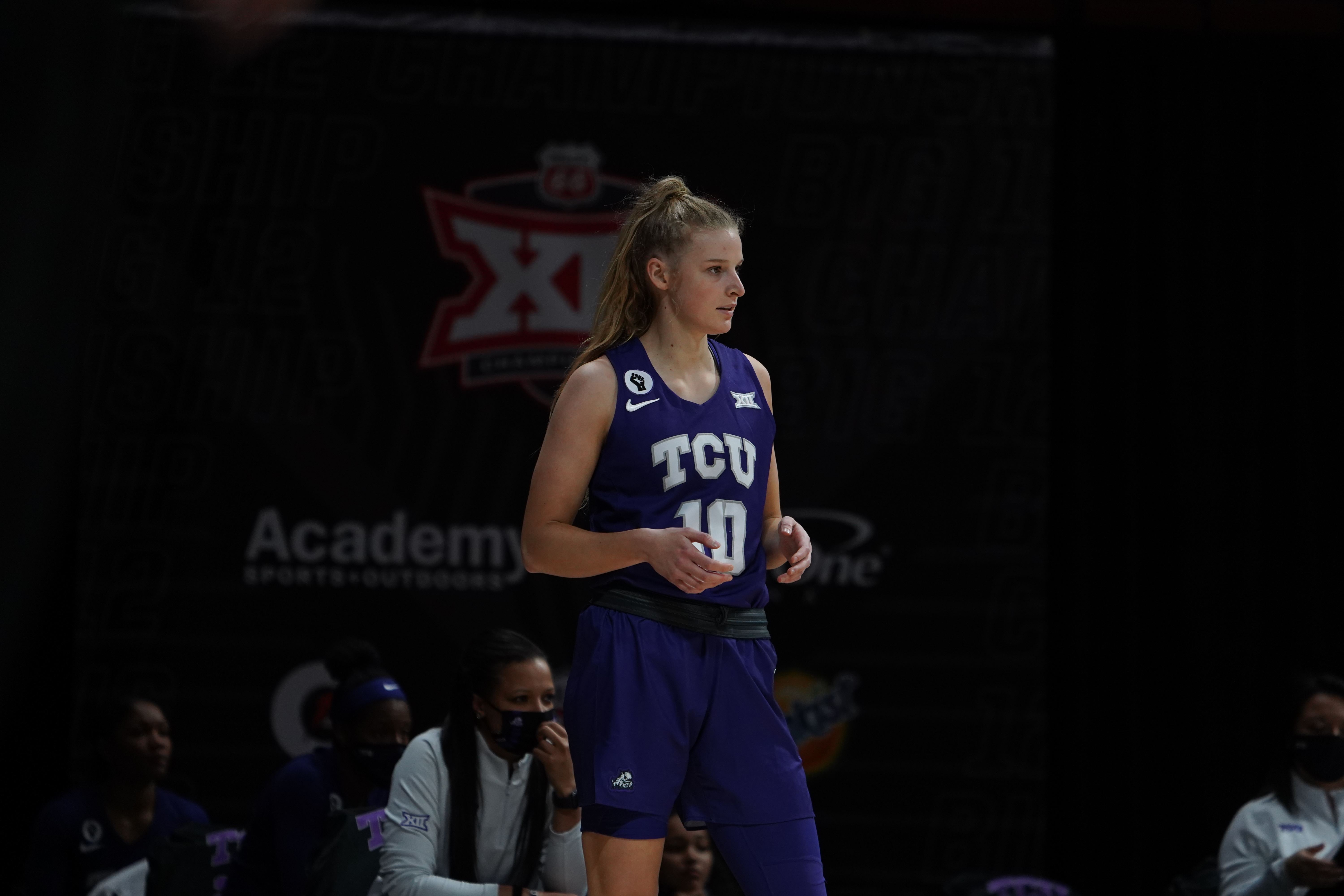
After graduating from TCU, Schmidt earned a master's degree in statistical science from Duke University, where she also played basketball. An internship at Nike introduced her to sports retail, and she later joined the Phoenix Suns' Business Intelligence team. The role brought her into professional sports, but she still wanted to work closer to the game itself. Through networking and relationships, she eventually moved into basketball analytics with the Phoenix Mercury.
Her work changes with the season. During the offseason, she evaluates free agency targets, studies how players' skill sets fit within team systems and builds draft models to assess amateur talent and long-term development. During the season, her focus shifts to performance analysis – studying what worked, what did not and how different strategies affect team outcomes.
For students who love both math and sports, her path shows how quantitative skills can travel far beyond the classroom. But Schmidt says the technical side is only part of the job.
"You can build the best model in the world, but if no one understands it, it won't have any impact."
Her advice for students interested in sports analytics is to start applying their skills now. Her master's thesis at Duke focused on optimizing possessions using women's basketball data. When she interviewed with the Mercury, she could point to work that was specific, relevant and already completed.
Faculty mentorship also shaped her path. Schmidt credits Actuarial Program Director Susan Staples, Ph.D., with encouraging her to pursue Duke when she was deciding whether to remain at TCU for an additional year of basketball eligibility and graduate school.
"She encouraged me to pursue the graduate program at Duke and helped guide me through the difficult decision to leave TCU," Schmidt says. "She helped me see the bigger picture."
That decision allowed Schmidt to play at Duke, develop new statistical and coding skills and continue working toward the sports analytics career she wanted.
From TCU Math to Machine Learning Research
Nguyen came to TCU as an international student from Da Nang, Vietnam, with a clear goal already in mind: earning a Ph.D. He graduated in spring 2025 with bachelor's degrees in mathematics and computer science. He chose TCU in part because it offered the undergraduate research opportunities in mathematics that he wanted.
He says close relationships with professors, strong teaching and access to advanced electives gave him both the preparation and the inspiration to pursue research.
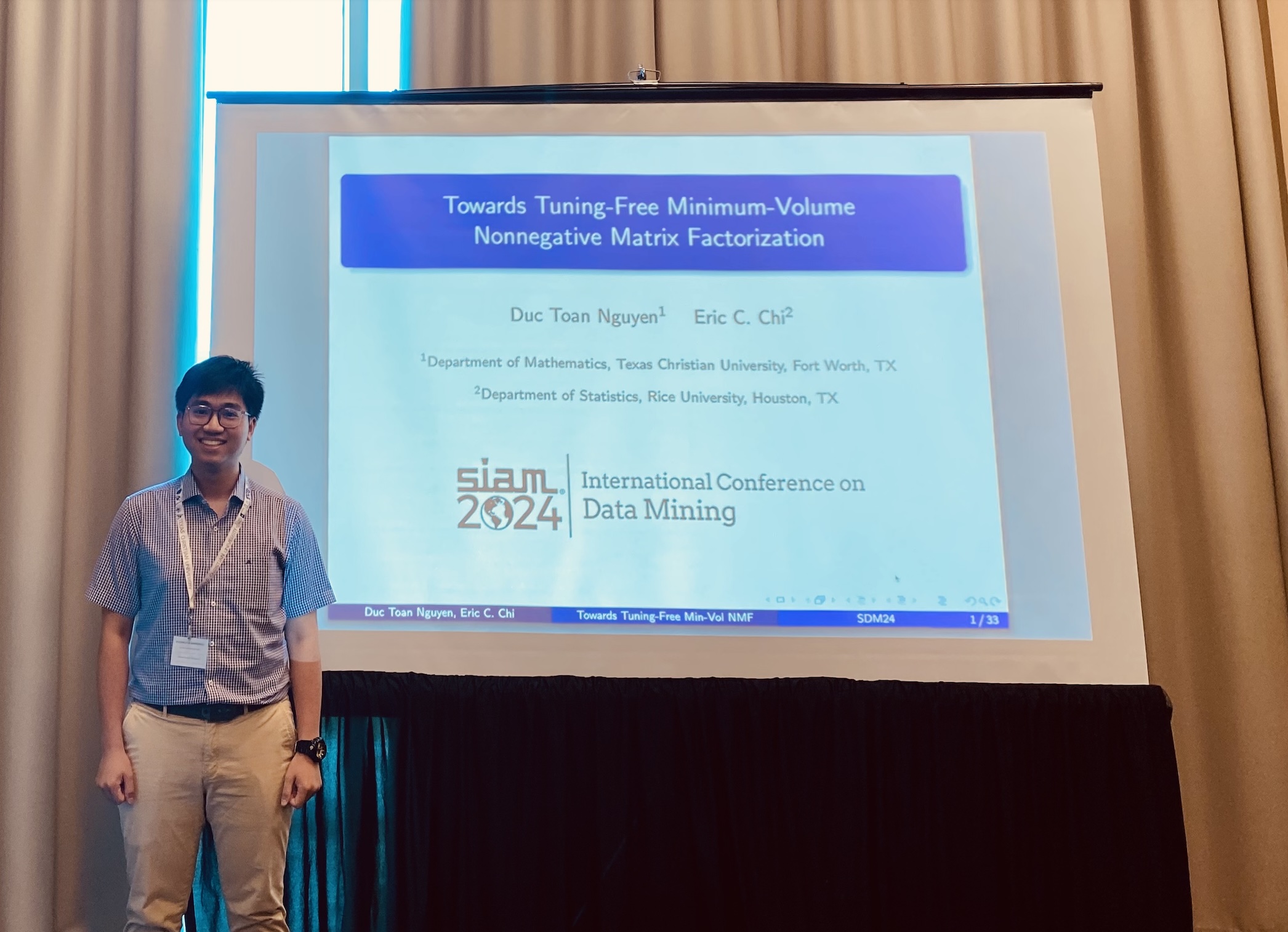
At TCU, Nguyen completed four undergraduate research projects. One grew out of a summer research program in Rice University's Department of Statistics after his sophomore year. Mathematics electives he had already completed at TCU helped prepare him for the program, and the project led to his first published paper at SIAM SDM24, an international conference on data mining.
His three-year honors research project with Dr. Ken Richardson, whose areas of focus include differential geometry and global analysis, gave him the mathematical foundation for his current work. Nguyen is now a doctoral student in electrical and computer engineering at Rice University, where his research focuses on mathematical optimization and machine learning theory. He says courses including applied linear algebra, real analysis and differential geometry were essential preparation.
Scott Nollet, professor of mathematics, says undergraduate research in math often looks different from research in laboratory-based fields. A student may first complete a reading course to build depth in a topic, then conduct much of the investigation independently with a professor's direction. Because that work is often one-on-one, it can create close mentorship while also limiting how many projects a small department can support at the same time.
Nguyen also makes a point that may surprise students who associate artificial intelligence mainly with coding rather than mathematics.
"To understand how AI models are built, you need to have a good background in linear algebra, analysis and statistics."
Why a Smaller Program Can Change Everything
Students comparing TCU with a large research university may assume that a larger department automatically means more opportunity. The experiences of TCU alumni and faculty show a more complete picture: size affects not only how many courses or research projects a department can offer, but also how personally students can be known and guided. Nollet says one of the advantages of a smaller department is the opportunity for students and professors to build closer relationships.
"Certainly the students get to know faculty better," Nollet says.
Nollet also notes that a smaller department cannot offer every desired course every semester or accommodate as many simultaneous undergraduate research projects as a much larger institution. For students, that makes planning with advisers and approaching faculty early especially important.
The smaller community extends beyond formal coursework. Nollet points to math club meetings over pizza or treats, game nights, short talks by students and faculty, and actuarial science events featuring speakers from industry.
For Nguyen, that community included dinner with the entire computer science faculty after his induction into Upsilon Pi Epsilon, the first and only international honor society for the Computing Sciences. For Schmidt, it meant having a professor who understood both the academic and athletic sides of a major decision and helped her consider the long-term possibilities.
Those moments are difficult to capture in a rankings metric. For students who enjoy mathematics but are still discovering where it may lead, access to professors can become one of the most meaningful parts of the college experience.
A Degree with More Than One Path
"The math degree is a generalist degree with many avenues," Nollet says.
Studying math does not lock students into one future. Alumni can apply quantitative thinking in data science, actuarial work, research, finance, technology, artificial intelligence, professional sports and other fields that continue to evolve.
For high school students who love math but have not settled on a direction, Schmidt's and Nguyen's paths offer the same underlying message: You do not need to know the full plan yet. A strong mathematical foundation keeps options open. It can lead to research on the theory behind machine learning, draft models for a WNBA front office or work that may not have a familiar job title yet.
At TCU, students can build that foundation through coursework, independent research and faculty relationships close enough to help them discover what they want to do with it.
Ready to see where a TCU math degree could take you?
Explore TCU Mathematics and schedule a campus tour or department visit to experience the program and TCU community in person.